

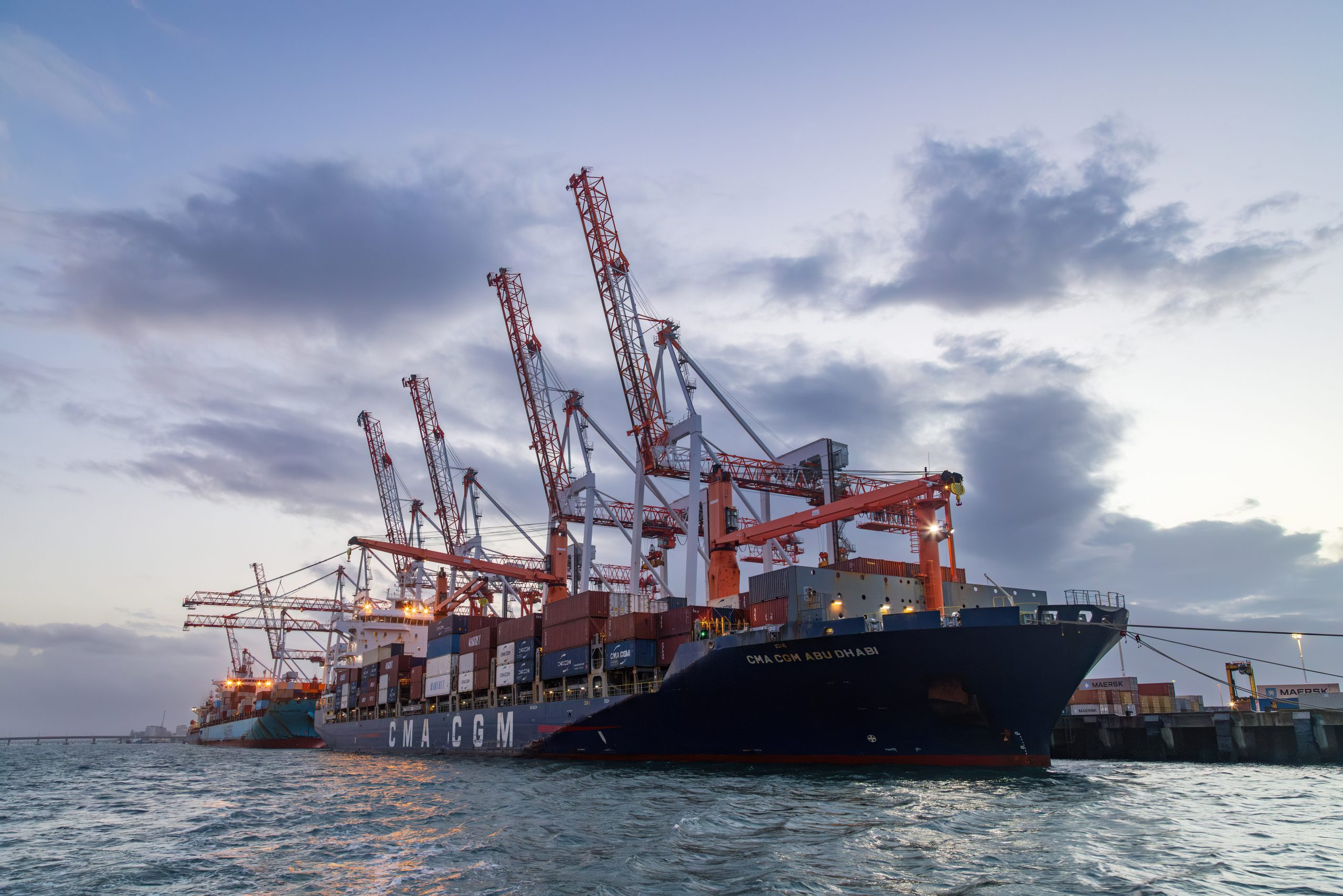


The Transport and Infrastructure Committee (Committee) presented its report on the Inquiry into ports and the maritime sector to the House in September 2026. It is the first cross-party parliamentary inquiry into the sector. The Committee received submissions from 86 organisations and individuals, heard oral evidence from 11 submitters, and visited a number of ports and freight facilities.
The report makes 19 recommendations to the Government and to port companies. Several of the recommendations were made by majority only, which indicates an element of disagreement within the Committee about ownership and the extent of central direction. Although these are recommendations only, the report is a useful guide as to where policy and regulatory attention in the sector is likely to be directed over the next few years.
Consenting for port projects
The Committee described consenting as a major issue for ports and said it found the delays unacceptable. It pointed to the Port of Tauranga’s Stella Passage / Sulphur Point development, where the consent process began in 2018 and conditional approval was granted under the Fast-track Approvals Act 2024 in 2026, during which time the port had to turn away a major shipping service. Section 384A consents covering almost every port were due to expire in 2026 and were extended for 20 years under the Resource Management (Consenting and Other System Changes) Amendment Act 2025.
The Committee recommends that the regimes for consenting major capital developments (including capital dredging), renewing consents for port operations (including maintenance dredging), and consenting minor capital projects within ports all recognise the importance of ports and the need for timely, efficient and reliable decisions. It also considers that, other than for major capital developments, third party involvement should not generally be required when ports seek resource consents.
Port pricing, transparency and competition
Submitters raised concerns about rising port charges, limited transparency around how charges are set, and the market power of some ports where users have few alternatives. Specific concerns included vehicle booking system charges at the Port of Auckland, infrastructure levies and access charges, and the fact that ports are not subject to information disclosure requirements equivalent to those applying to airports.
The Committee recommends that the Government ask the Commerce Commission to use its existing powers to better monitor pricing and competition, and that ports consistently disclose comparable performance and pricing information. If substantial and persistent market power is demonstrated, the Committee says stronger economic regulation should be considered.
Ownership and governance
Most ports remain owned fully or partly by regional or unitary councils and managed under the Port Companies Act 1988, with Napier Port, South Port and the Port of Tauranga having minority stakes publicly listed. The Committee notes the proposed abolition of regional councils and the resulting uncertainty about port ownership and is concerned that reorganisation could fragment ownership further or lead to ad hoc sales of small holdings.
By majority, the Committee recommends that the Government support continued full or majority public ownership of strategic port assets, while acknowledging the role of the private sector. Some Committee members took the view that port operations should be open to competition in terminal operations and access to monopoly infrastructure, subject to competition law and a national security test, and that ownership decisions belong to existing owners and their communities.
A National Ports Strategy and the hub-and-spoke question
A common theme across submissions was the absence of national coordination, with investment decisions made port by port. By majority, the Committee recommends a National Ports Strategy developed in partnership with the sector, covering port roles, land connections, inland ports, coastal shipping, investment, resilience, decarbonisation, workforce, security, regional access, and the role of mana whenua in the planning and stewardship of strategic coastal infrastructure.
As part of that work, and again by majority, the Committee recommends examining whether a move toward a hub-and-spoke model would improve efficiency and productivity. Submitters used the term in different ways and proposed different numbers and locations of hub ports. The Committee records the concern that concentration could make container operations unsustainable at some regional ports and reduce network resilience and considers it an important matter requiring careful consideration.
Cabotage and coastal shipping
Section 198 of the Maritime Transport Act 1994 (MTA) allows foreign ships to carry coastal cargo only where it is incidental to the carriage of international cargo and the vessel is on a continuous journey. Submitters had mixed views on this, with some of the view that the current settings favour foreign operators, who carry the majority of coastal volume, and suggested clarifying the meaning of “incidental” and introducing a levy. A.P. Moller-Maersk argued for removal of the continuous journey requirement. Following the withdrawal of the MV Moana Chief by Pacifica in 2026, all coastal container shipping is carried out by foreign operators.
The Committee recommends that the Government review the effectiveness and appropriateness of section 198 MTA. By majority, it also recommends recognising coastal shipping as a core part of the national freight network, and that road and rail connections to ports be recognised in the next Government Policy Statement on land transport.
Productivity, automation and infrastructure
The Committee heard that productivity at the major container ports has fallen, with the International Container Lines Committee putting the decline at around 20 percent since 2019 levels. With the exception of Wellington, New Zealand’s container ports ranked in the bottom half of the 400 ports ranked in the World Bank’s 2025 Container Port Performance Index. The report also records the failure of the Port of Auckland automation project, including the independent review’s findings on governance, project management and procurement.
The Committee recommends that opportunities to improve productivity and utilisation of existing infrastructure be rigorously tested before significant new capacity is funded, and that investment in infrastructure be assessed as part of an integrated freight system covering road, rail, coastal shipping, inland ports and intermodal facilities.
Workforce, health and safety, and resilience
The Committee recommends:
- A long-term maritime workforce plan covering career pathways, training, retraining, multi-skilling and succession for specialist roles.
- A review of the recognition of overseas qualifications for key maritime and port-related skills.
- By majority, that changes to port ownership, operations, technology or regulation do not weaken existing health and safety protections, and that workers and unions are actively involved in decisions on workplace practices, technology adoption and automation.
- That port planning and investment decisions explicitly assess the resilience of the freight supply chain to seismic events, including alternative arrangements if a port is out of operation for an extended period.
Data and information
The Committee was frustrated by the difficulty of finding current, relevant and consistent data on port productivity and performance and considers that better information is essential to improving productivity. It recommends a national freight and port data framework with common definitions, consistent reporting, confidentiality protections and publication of comparable performance measures. It also welcomed the decision to update the National Freight Demand Study and recommends the study be expedited.
Comment
The report was presented to the House in September 2026. Although the Government must respond to the report within 60 working days, with a general election coming the report’s greater significance may lie in the longer term. Coming at a time when New Zealand faces significant structural challenges around infrastructure, productivity, and cost of freight movement, the report may set down some guidance for future policy development.
Ports and connected freight infrastructure are critical national assets. Delivering meaningful improvements in productivity, resilience and capacity will require coordinated investment and policy settings that endure beyond future electoral cycles.
If you have any questions about the report or what it may mean for your business, please get in touch with our Trade and Transport team.
The report, and the submissions and advice received, are available on the Parliament website: Inquiry into ports and the maritime sector.

