

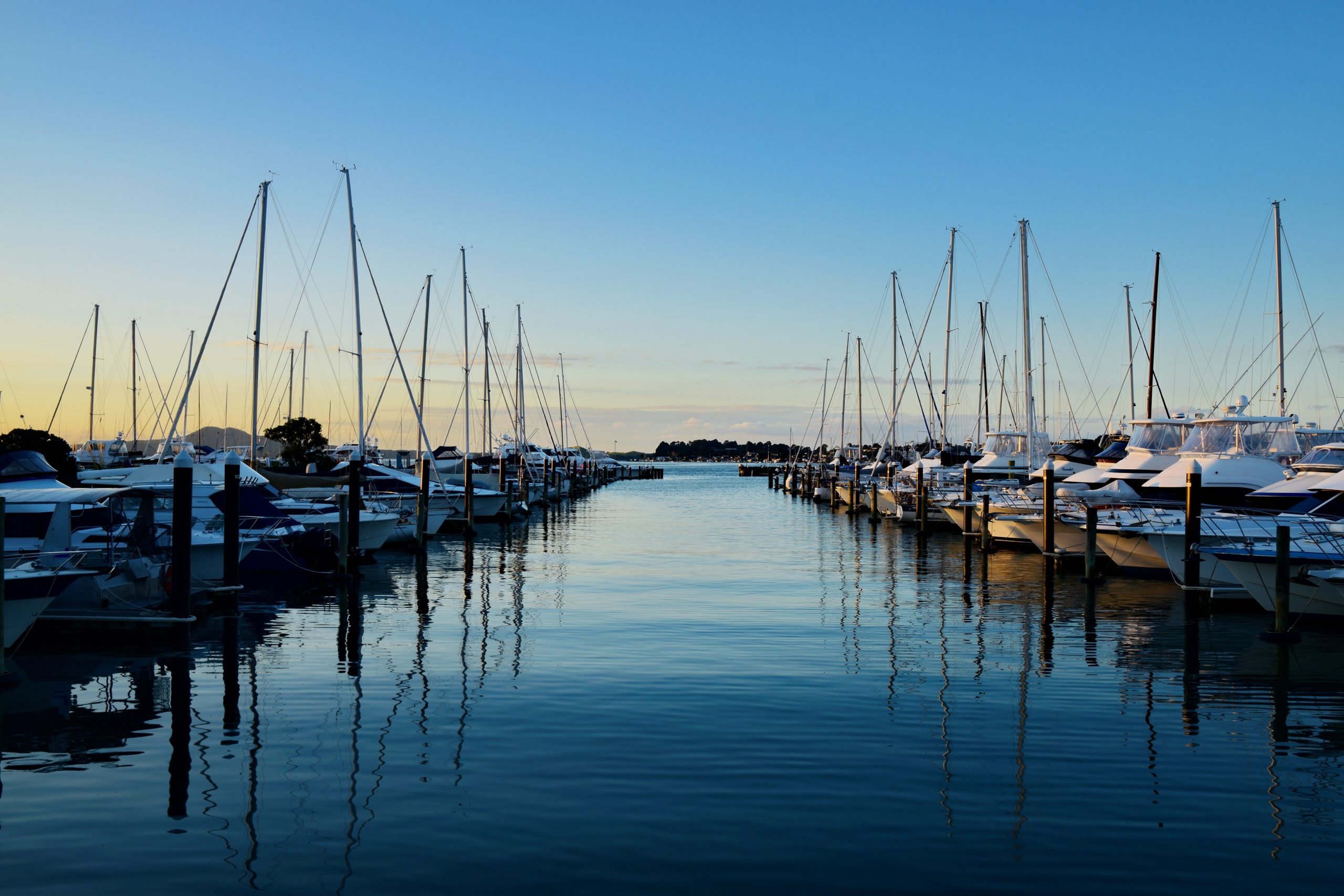


With the South Pacific cyclone season generally running from November to April, it is not uncommon for owners of foreign-flagged yachts to head to New Zealand for the summer.
A Customs Appeal Authority decision is a timely reminder that duty is payable on a vessel brought into New Zealand unless it is entered under a temporary import entry (TIE) and the conditions of that entry are met.
Temporary import status is available at Customs’ discretion where the owner applies for it, satisfies Customs the import is temporary and provides security. Once a liability has arisen, it remains even if the vessel later leaves New Zealand.
In XXXX v Chief Executive of the New Zealand Customs Service [2025] NZCAA 04, the owner of a catamaran ended up paying almost $97,550 in duty, GST and interest after he failed to complete a TIE. The Authority dismissed his appeal.
What happened?
The owner bought his catamaran in New Caledonia for €245,000, intending to live on board and sail long term. He brought it to New Zealand to avoid the Pacific cyclone season and the cost and difficulty of insuring it during that period.
In November 2023, hired crew sailed the yacht from Fiji to Auckland (the first importation). On arrival, the owner signed a Customs notice explaining that a TIE was available in specific circumstances, that security in the form of a bond for the duty had to be provided within 20 working days, and that the vessel must stay where it was until then. He took no further steps to complete the Customs entry documentation. Instead, he moved the yacht to another marina, sailed it around the Hauraki Gulf, and in May 2024 sailed to Fiji, believing no duty was payable.
When he sailed back to New Zealand in October 2024 (the second importation), he gave Customs a copy of the bill of sale showing the price as NZ$245,000 rather than €245,000. He received a $400 infringement notice for this. He then applied for temporary import status, but Customs concluded duty was already owed on the first importation. The yacht was seized in February 2025 and released after the owner paid $20,983.80 in import duty, $66,098.96 in GST and $10,463.82 in interest on the unpaid duty.
When does liability for duty arise?
Generally, liability for duty on a vessel brought into New Zealand arises on importation. Under the Customs and Excise Act 2018 (Act),[1] duty on imported goods is a debt owed by the importer, which includes the owner. Because the debt arises under the Act itself, it exists even if no import entry has been lodged and Customs has not yet calculated or demanded the amount. In this case, the Authority confirmed that the owner became liable when the yacht first arrived in Auckland in November 2023.
How does temporary import status work?
Under the Act, Customs may release a vessel without payment of duty if it is satisfied the vessel has been temporarily imported and it receives security equal to the duty payable.[2] The security is released if the vessel is exported within 12 months of importation, or a longer period Customs allows (currently up to 21 months for small craft).[3] To obtain this status, the owner must lodge a TIE under Customs’ rules for entering goods, together with the security, within 20 working days of arrival.[4] It is up to the owner to start the process.
The form of security is at Customs’ discretion. For small vessels, Customs has prescribed a TIE form for owners who are not New Zealand residents, who declare that status and undertake to export the vessel by a specified date. New Zealand residents can also use temporary importation but should expect stricter security requirements, such as a bond. The Authority accepted this is justified, because a resident’s vessel is more likely to stay in New Zealand. The owner in this case could have sought temporary import status by lodging a TIE and providing security, but did neither, so the duty remained payable.
Who is responsible for compliance?
Responsibility sits with the owner. The Authority made clear that the owner, as the person responsible for a vessel used for international voyages, was expected to understand New Zealand’s customs requirements, just as occasional travellers and importers are. Information given by Customs on arrival, or a lack of follow-up or enforcement by Customs afterwards, does not change the liability imposed by the Act, so it is important to understand the requirements before you sail.
What should vessel owners do?
- Advance notice of arrival: An Advance Notice of Arrival is mandatory and must reach Customs at least 48 hours before you enter New Zealand waters.
- Don’t delay: If you want temporary import status, Customs recommends submitting your TIE request (form NZCS 274) before you depart on your voyage to New Zealand. Arrange security as soon as possible and within 20 working days of arrival. Do not move or use the vessel until the TIE and security are in place.
- Check your residence and domicile: Whether you are a New Zealand resident, or domiciled here, affects whether you can use a TIE and which form and security apply. Get advice on your status before you arrive.
- Read what you sign: Customs notices set out your obligations, and you are treated as knowing them. Keep a copy of anything you receive.
- Accurate documents: Check every document you give Customs to ensure accuracy. Providing materially incorrect information is an offence and can result in the vessel being forfeited to the Crown.[5]
- Leaving does not cancel the debt: Once a liability has arisen, exporting the vessel does not cancel it. The main route to recovering duty is a drawback claim under the Act,[6] which is at Customs’ discretion and has conditions.
- Act quickly if things go wrong: Interest accrues on unpaid duty. Steps such as a review of a seizure or a drawback claim must be started by you.
How we can help
With Customs having reduced the maximum temporary import stay to 21 months from 1 September 2026, and the paper TIE due to be replaced by an electronic TIE from 1 May 2027, it is important to check your arrangements against the current Customs requirements.
If you are bringing a vessel into New Zealand or have any questions regarding New Zealand Customs requirements, please get in touch with the Trade and Transport team or your usual contact at Hesketh Henry.
Disclaimer: The information contained in this article is current at the date of publishing and is of a general nature. It should be used as a guide only and not as a substitute for obtaining legal advice. Specific legal advice should be sought where required.
[1] Section 100. Under the Act, ‘duty’ includes GST: s 5(1)
[2] Section 136(1)
[3] Section 136(2). The 21-month limit is Customs’ current practice.
[4] Section 75(1)(a); Customs and Excise Regulations 1996, reg 21(1)(a)
[5] Section 176(1)(d)(ii)
[6] Section 147

